
Some links in this post may be affiliate links. We earn a small commission if you buy, at no extra cost to you.
I was standing on a suspension bridge built by Depression-era workers in the 1930s, looking down at water so clear I could see the bottom. And then I saw the alligator.
It wasn’t hiding. It wasn’t thrashing. It was simply there – long, ancient, and utterly indifferent to my presence – drifting just below the surface like it had been doing this since long before the bridge existed. Because it had.
This is Hillsborough River State Park, and it is not what most people expect from a Florida state park thirty minutes from Tampa.
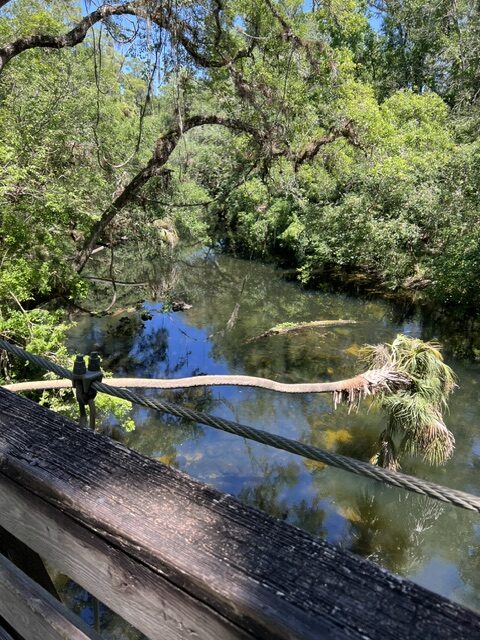
Older Than You Think
Hillsborough River State Park is one of the eight original Florida State Parks, opened in 1938. It was built by the Civilian Conservation Corps – young men put to work during the Great Depression – and some of their original structures still stand today, including the suspension bridge itself.
There are only 12 suspension bridges in the entire state of Florida, and this park is home to one of them. When you walk across it and feel it sway gently under your feet, you’re walking the same boards – or close to them – that have been crossing this river for nearly a century.
The river was named in the late 1700s for Wills Hills, the British Colonial Secretary and Lord Earl of Hillsborough. Long before the British named it, the Seminole people lived along its banks, hunted its forests, and fished its waters. During the Second Seminole War, Fort Foster was built here to defend the bridge crossing and serve as a resupply point for soldiers in the field. The wilderness you’re walking through is not just beautiful – it’s contested ground with centuries of memory.
On the Trail
I went on a Saturday morning, which meant other hikers on the trail. But the crowds thinned quickly once you moved away from the parking area. When the trail emptied out and the canopy closed overhead, something shifted.
The sunlight came through the trees in shafts – the kind of light that feels deliberate, almost holy. The air smelled clean in a way that’s hard to describe to someone who hasn’t experienced it. Not just fresh – ancient. Like you were breathing something that hadn’t been touched.
The river here has one of the few sets of Class II rapids remaining in Florida – most were dynamited for commerce more than a century ago. Standing above them, watching the water push and tumble through a narrow chasm of cypress roots and limestone, you realize how rare this is. Most of Florida’s rivers have been tamed. This one still has something to say.
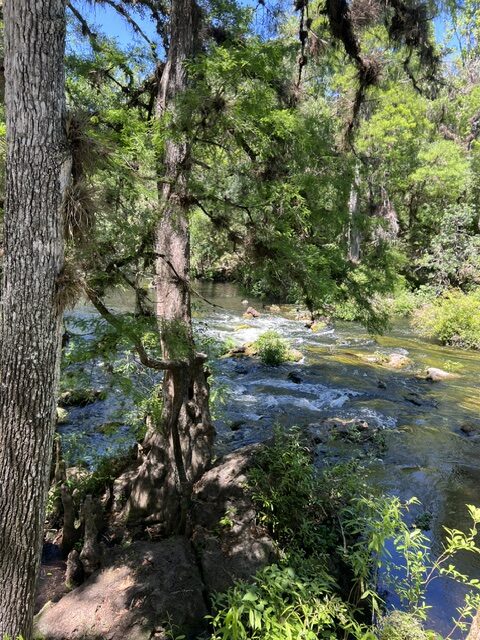
The trails felt spooky in the best possible way – old Florida wilderness where the undergrowth crowds the path and you find yourself listening for things you can’t identify. I kept looking behind me.
The Tree
At some point on the nature trail, I stopped in front of an ancient cypress tree so wide and so hollow that I walked inside it. I’m six feet tall. The hollow swallowed me completely.
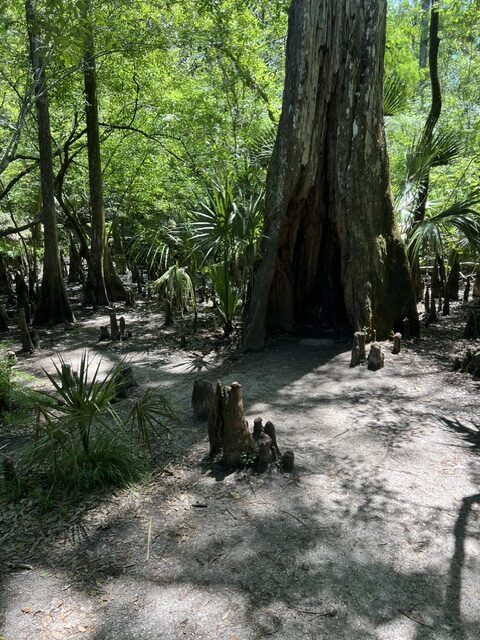
Standing inside a living tree that has been growing for centuries – surrounded by nothing but bark and shadow – does something to your sense of time. The Seminoles walked past this tree. The CCC workers walked past it building the trails. The alligators in the river have outlived generations of everything around them.
Florida is older than we remember.
The Alligators
I saw several. Not glimpses – full sightings. One drifted beneath the suspension bridge while I was standing on it. Others lay along the river banks, motionless, their ridged backs barely distinguishable from the fallen logs around them.
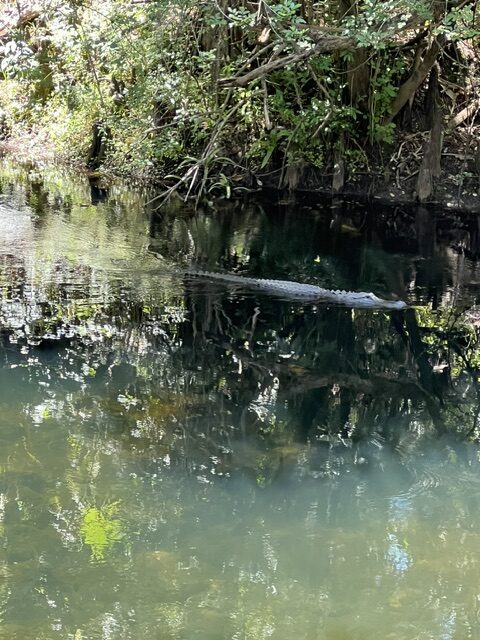
The water is clear enough that you can see them from above before they see you. There’s something deeply humbling about that – being the visitor in a place where something else is clearly at home.
The Prayer
Near the end of the trail, I came across a weathered wooden sign in the trees. It was titled Prayer of the Woods. I stood there and read it slowly.
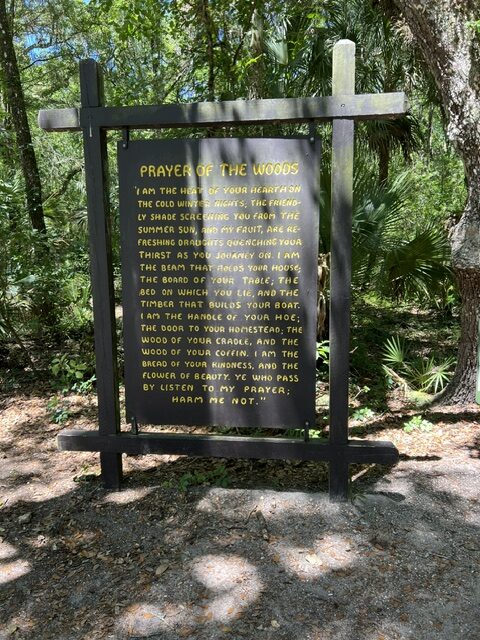
The words stopped me. Not because they were surprising – but because they were true. The woods weren’t asking for gratitude. They were asking for restraint. Only take what you need. Recognize what you’ve been given. Stop before you destroy what cannot be replaced.
Standing in that forest, surrounded by old growth that somehow survived everything Florida has thrown at it – development, hurricanes, the relentless pressure of a growing state – the prayer felt less like poetry and more like a warning.
We still have places like this. The question is whether we keep them.
Before You Go
- Address: 15402 US-301 N, Thonotosassa, FL 33592
- Hours: 8:00 AM to sunset, daily
- Entrance Fee: $6 per vehicle (2-8 people), $4 single occupant, $2 per pedestrian/cyclist
- Trails: Over 7 miles including the Rapids Nature Trail and suspension bridge access
- Wildlife: Alligators, turtles, deer, bobcats, and hundreds of bird species
- Note: Some trails remain closed following Hurricane Milton damage — check the Florida State Parks website before visiting
Bring water. Go early. And when you find the Prayer of the Woods. Stop and read it.
See what we bring on every trip: What We Carry
— Unmapped Florida