
Some links in this post may be affiliate links. We earn a small commission if you buy, at no extra cost to you.
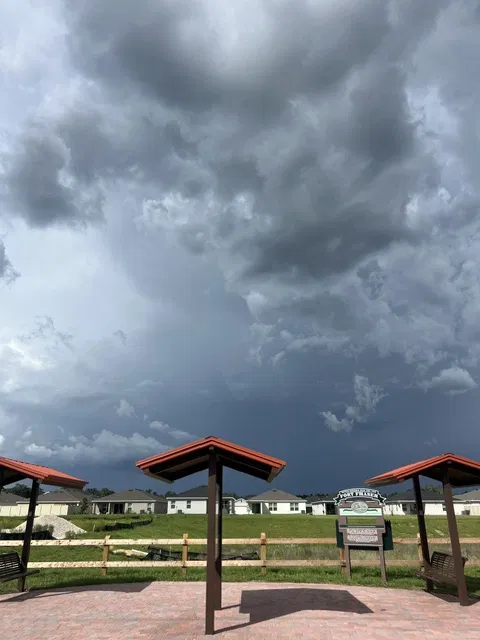
The clouds rolling in that Sunday afternoon felt like a warning. Dark, churning, pressing low over the open field where a 19th-century military fort once stood – a fort that most of the joggers and cyclists passing through don’t know exists, let alone pause to acknowledge. They roll past the historical marker without a second glance, headphones in, pace steady, completely unaware that the ground beneath their feet once held hundreds of prisoners, dying soldiers, and the echoes of one of Florida’s most brutal conflicts.
That is the quiet tragedy of Fort Fraser.
A Trail Built on Forgotten Ground
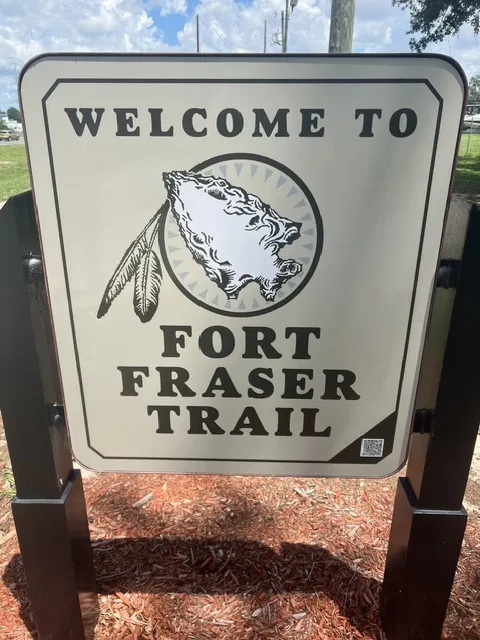
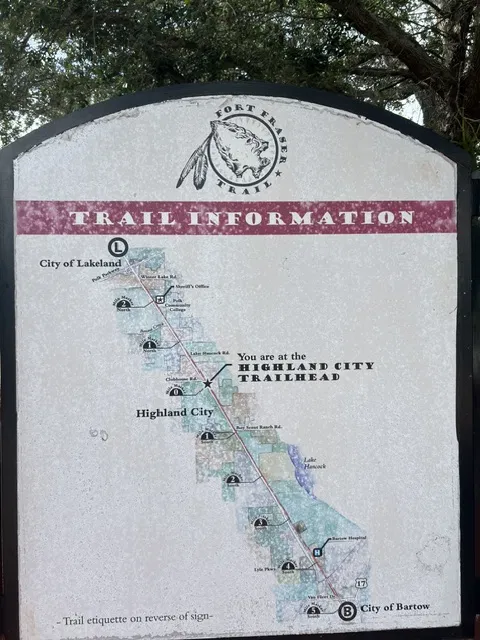
The Fort Fraser Trail stretches 7.75 miles between Lakeland and Bartow through what looks, at first glance, like an unremarkable corridor of Florida flatlands. Power lines overhead. New subdivisions creeping in from the edges. The ordinary machinery of modern Florida doing what it does best – erasing everything that came before it.
But stop. Read the signs. This ground remembers.
The trail is part of Florida’s Seminole Wars Heritage Trail, a statewide network of sites connected to the longest and most expensive series of conflicts in American military history. Fort Fraser sits at the quiet center of it – a place that shaped a presidency, displaced hundreds of people, and vanished so completely that all that remains is a bronze marker most people jog right past.
The Fort That Colonel Taylor Built
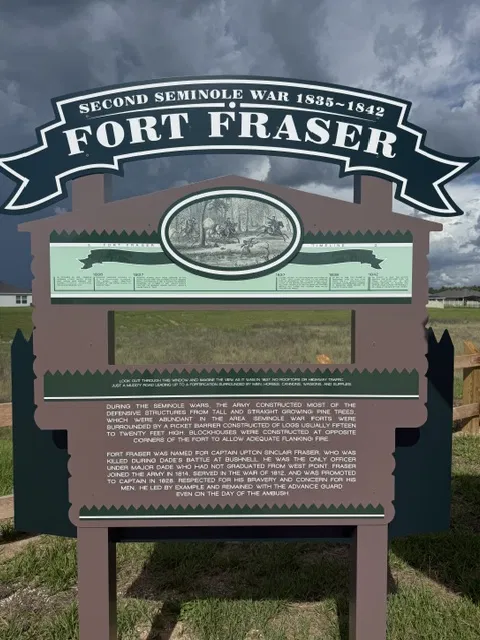
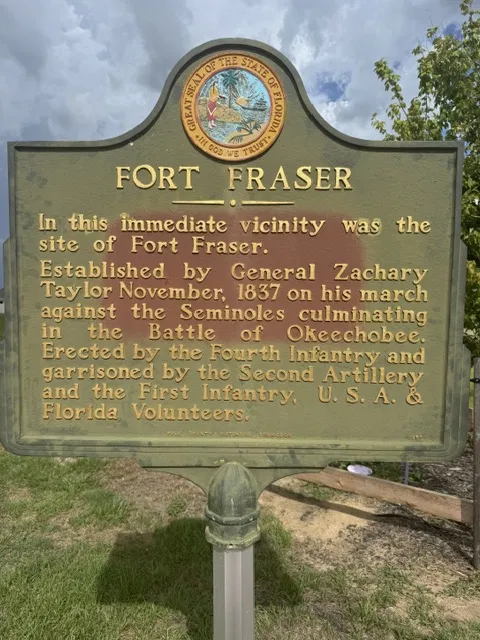
In November 1837, Colonel Zachary Taylor – not yet the celebrated general he would become, and decades away from the presidency – established Fort Fraser at this site during the Second Seminole War (1835-1842). The distinction matters: Taylor was a Colonel at the time, promoted to Brigadier General only after the campaign that followed. The fort was constructed near Lake Hancock on the former plantation grounds of Seminole Chief Oponey, who had allied with the Red Sticks during the Creek Civil War. The U.S. Army did not simply build nearby – they built directly on top of what had been seized.
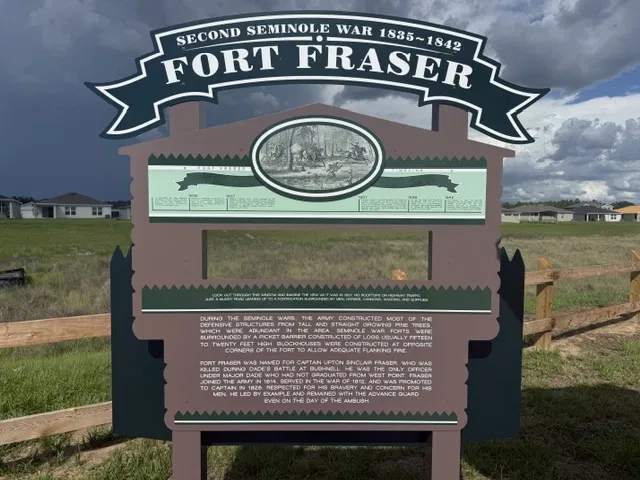
The fort was named in honor of Captain Upton Sinclair Fraser, a man who never saw it built. Fraser had been killed two years earlier in the Dade Massacre of December 1835 – the opening ambush of the Second Seminole War, in which Major Francis Dade and most of his command were killed marching through central Florida. Fraser was the only officer under Dade’s command who had not graduated from West Point. Respected by his men and known for leading from the front, he remained with the advance guard even on the day of the ambush.
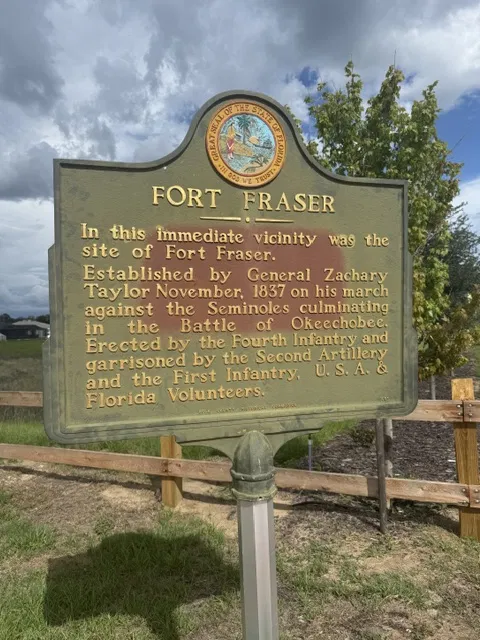
The fort was erected by the Fourth Infantry and garrisoned by the Second Artillery, the First Infantry, and Florida Volunteers. Taylor used it as his primary staging ground for the campaign that would lead directly to the Battle of Okeechobee on December 25, 1837 – a Christmas Day engagement fought in the flooded sawgrass of the Everglades that became one of the largest pitched battles of the Seminole Wars. Taylor’s performance earned him that promotion to Brigadier General and launched the national reputation that would eventually carry him to the White House as the 12th President of the United States.
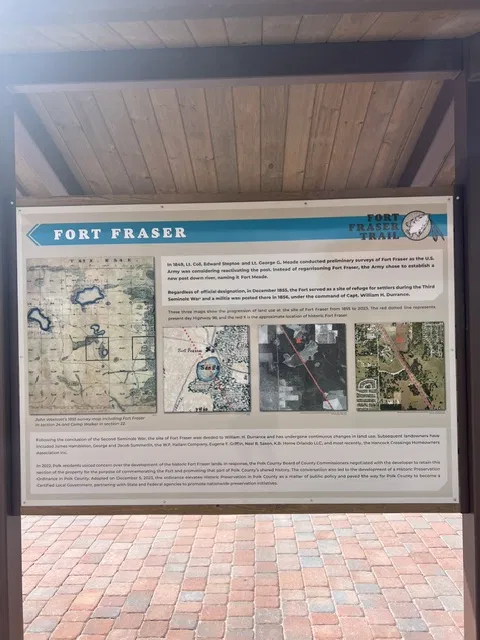
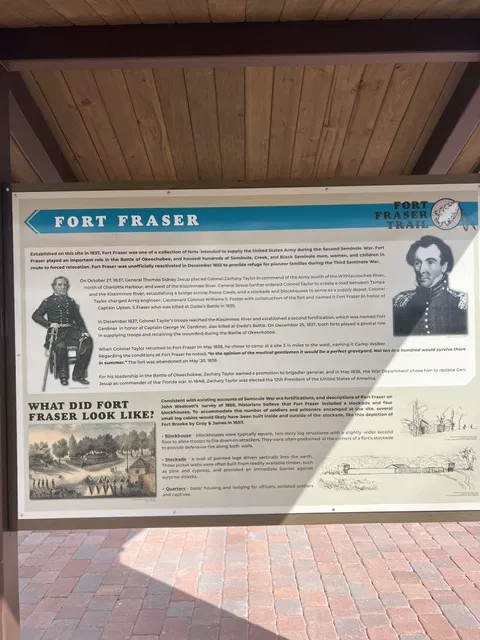
After the battle, Fort Fraser became something darker than a military post. The wounded were brought here to recover – or not. Historical records suggest that approximately 325 Seminoles and 30 Black Seminoles captured during Taylor’s campaign were held at the fort before being transferred to Fort Brooke in Tampa and ultimately forced westward – a forced relocation that mirrored the broader Trail of Tears dispossessions happening across the American South. The fort was formally abandoned on May 20, 1838.
During the Third Seminole War (1855-1858), the site was reactivated – not as a military garrison but as shelter for area families seeking refuge from renewed conflict in the region. Captain Francis Marion Durrance commanded Florida Militia troops stationed nearby during this period, leading reinforcements from the area to fight in the Battle of Tillis Farm, one of the bloodiest engagements of that war.
Note: Some sources suggest the site may have seen limited use during the Civil War era as well, though primary documentation for this is thin. The fort’s documented history firmly centers on the Seminole Wars.
After the Army Left
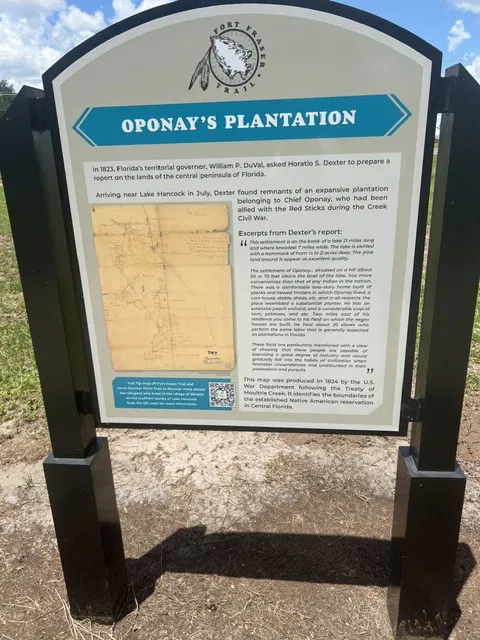
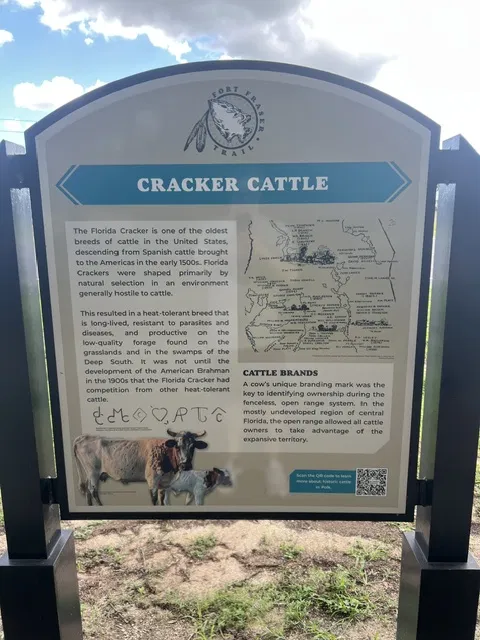
The land that Fort Fraser occupied passed through history quietly after the Army departed. Eventually it was purchased by Jacob Summerlin – known across Florida as the “King of the Crackers” – a wildly wealthy cattle baron credited with helping found both Bartow and Orlando, and reportedly the first white child born in Florida after Spain ceded the territory to the United States.
Summerlin refused paper money entirely, paying his debts exclusively in Spanish gold coins. Decades of rumors have followed: that somewhere near the old fort site, a cache of that gold still waits underground.
Whether that’s history or legend is a question the flatlands aren’t answering.
Walking the Fort Fraser Trail Today
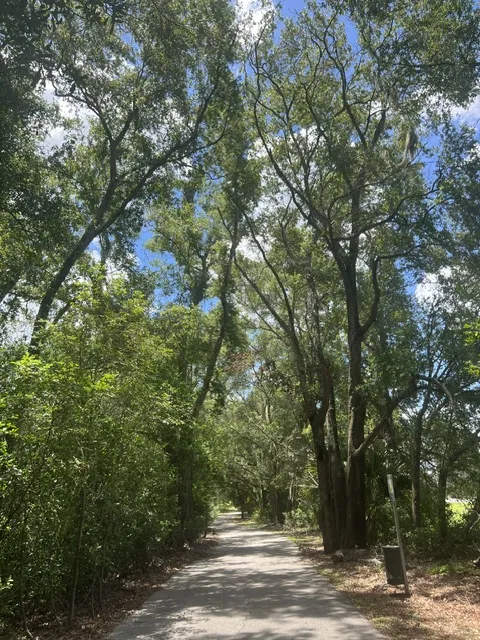
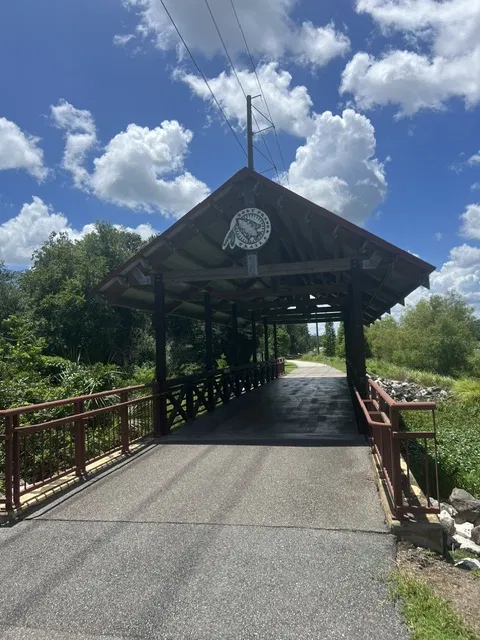
Step onto the Fort Fraser Trail on the right day and the atmosphere does some of the storytelling for itself. The canopy closes in along stretches near Highland City. The wetlands sprawl out beyond the bridge railing in a thick carpet of green, choked with water hyacinth, dense and motionless.
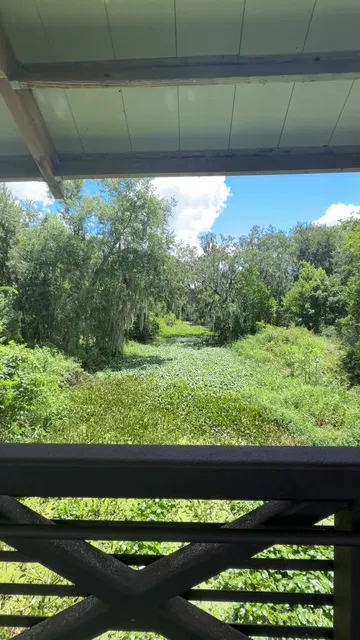
The covered bridge at the Highland City Trailhead is a landmark worth pausing at — not just for the view it frames, but for what it represents: a trail that took genuine community effort and advocacy to create. Polk County residents fought to preserve the Fort Fraser site when development threatened to consume it entirely. A Historic Preservation Ordinance, adopted in 2023, finally gave the site legal protection and paved the way for the trail to become what it is today. Standing there watching new rooftops rise on the horizon behind the historical markers, it is hard not to feel the tension between preservation and progress still playing out in real time.
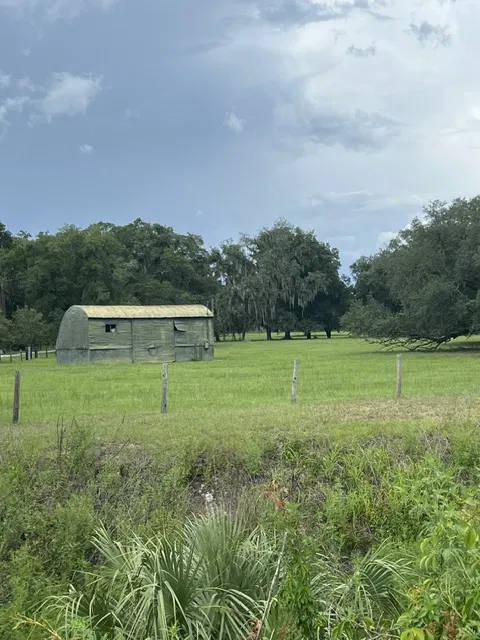
Further along, the old barn sitting back in the Spanish moss-draped trees appears like something out of a fever dream – weathered, tilted, entirely unbothered by whatever century it currently finds itself in.
And connecting it all, there are the quote pillars – unexpected little interruptions along the trail route, each one carrying a line worth reading slowly.
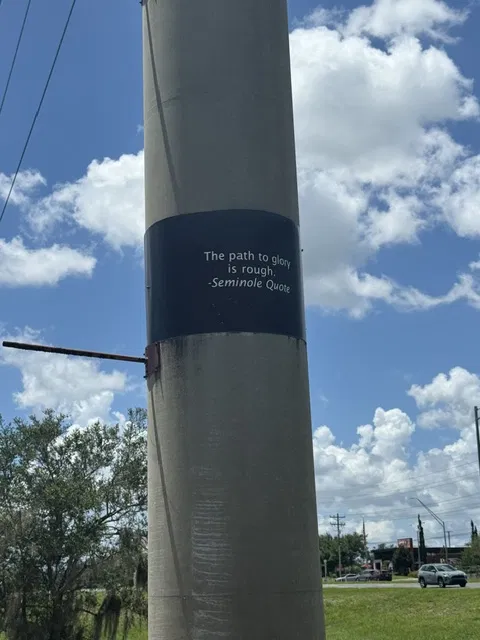
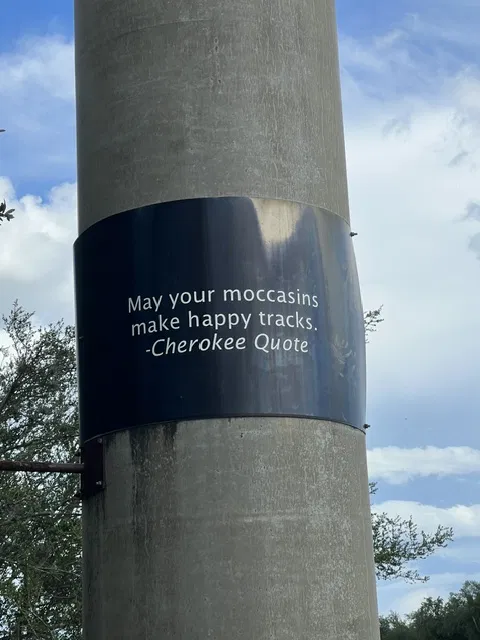
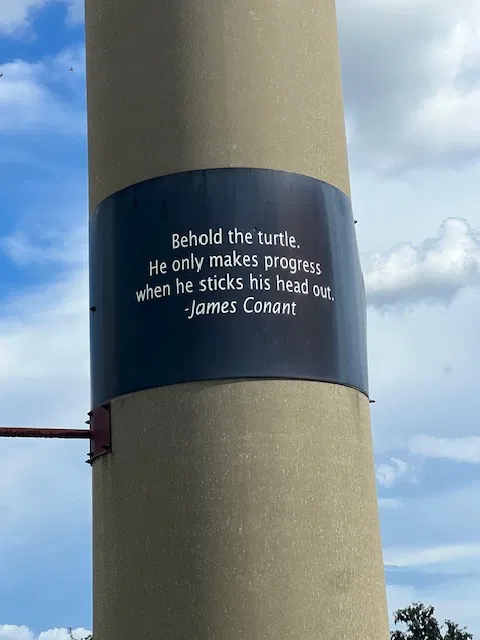
A Seminole quote on a trail that runs through Seminole War ground. The irony is not subtle. But neither is it unwelcome.
What Remains
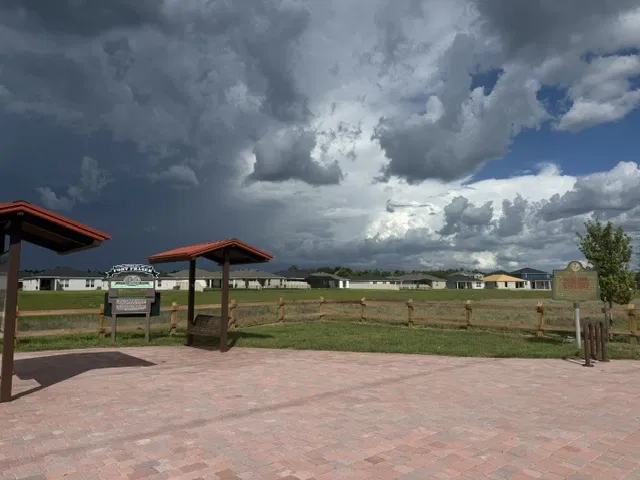
Standing at the Fort Fraser site on a Sunday afternoon, watching the storm build over the new rooftops where open frontier once stretched, it’s difficult not to feel the weight of the distance between then and now. The people who garrisoned this fort – and the people held against their will within it – faced something genuinely savage: disease, heat, displacement, and a conflict that dragged on for seven years with no clean resolution. The problems of the present feel smaller here. Not insignificant – just smaller.
Most people jog past the marker without stopping.
That’s their loss.
Plan Your Visit
The Fort Fraser Trail runs 7.75 miles between Lakeland and Bartow along US 98. Multiple trailheads provide access, including the Highland City Trailhead where the historical marker is located. The trail is paved and open to walkers, joggers, and cyclists. Parking is available at the trailhead.
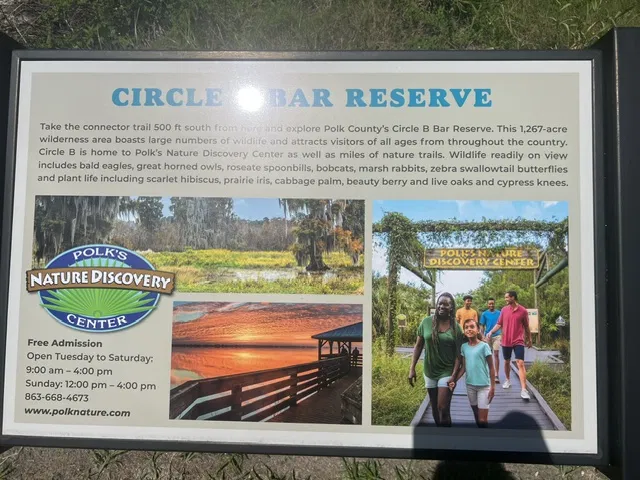
From the Highland City Trailhead, a short connector trail leads south to Circle B Bar Reserve – a 1,267-acre wilderness area with miles of nature trails, free admission, and wildlife including bald eagles, roseate spoonbills, and bobcats. Open Tuesday-Saturday 9am-4pm, Sunday 12pm-4pm.
Useful Links:
- Fort Fraser Historical Marker – coordinates and history
- Fort Fraser Trail — Bartow Chamber of Commerce
- Florida Seminole Wars Heritage Trail – Florida Department of State
Heading out on foot? See what we bring on every trip: What We Carry
The wilderness doesn’t end here. The Green Swamp is waiting.
Informative article, exactly what I needed.