
Some links in this post may be affiliate links. We earn a small commission if you buy, at no extra cost to you.
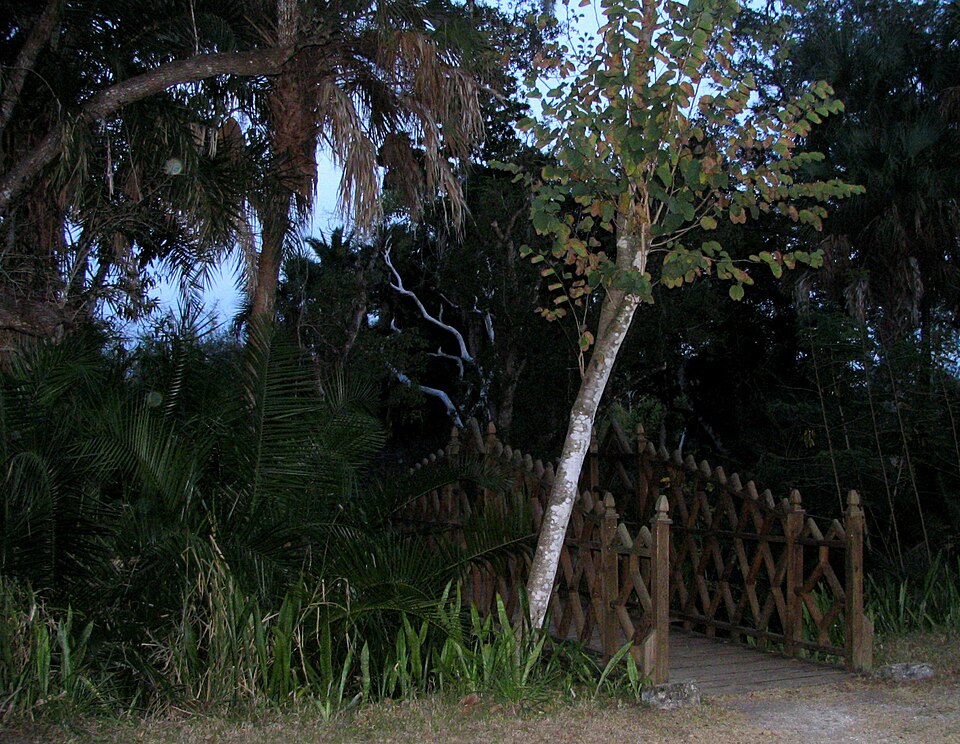
There is a place in Southwest Florida – Koreshan State Park, where moss-draped buildings stand silent along a slow brown river and the ghosts of a vanished civilization whisper through the palmettos.
Most people drive past it without a second glance.
But if you turn off US-41 in Estero and follow the narrow road into the trees, you will find the remains of a 19th-century cult colony built by a man who believed the entire human race was living on the inside of the Earth.
The Man Who Reinvented Reality
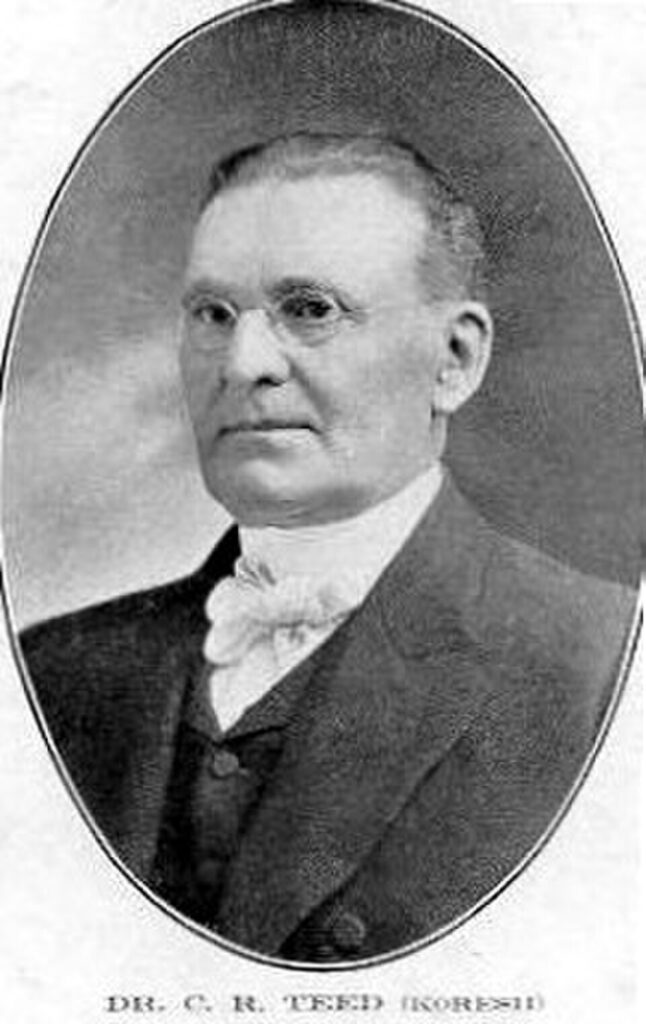
In 1869, a doctor and self-proclaimed alchemist named Cyrus Reed Teed was working alone in his New York laboratory when something happened to him.
He called it an illumination.
A divine figure appeared and revealed the true nature of the universe, humanity did not live on the outside of a sphere hurtling through space. They lived on the inside, a vast concave shell with the sun and stars floating at the center like a lamp in a jar.
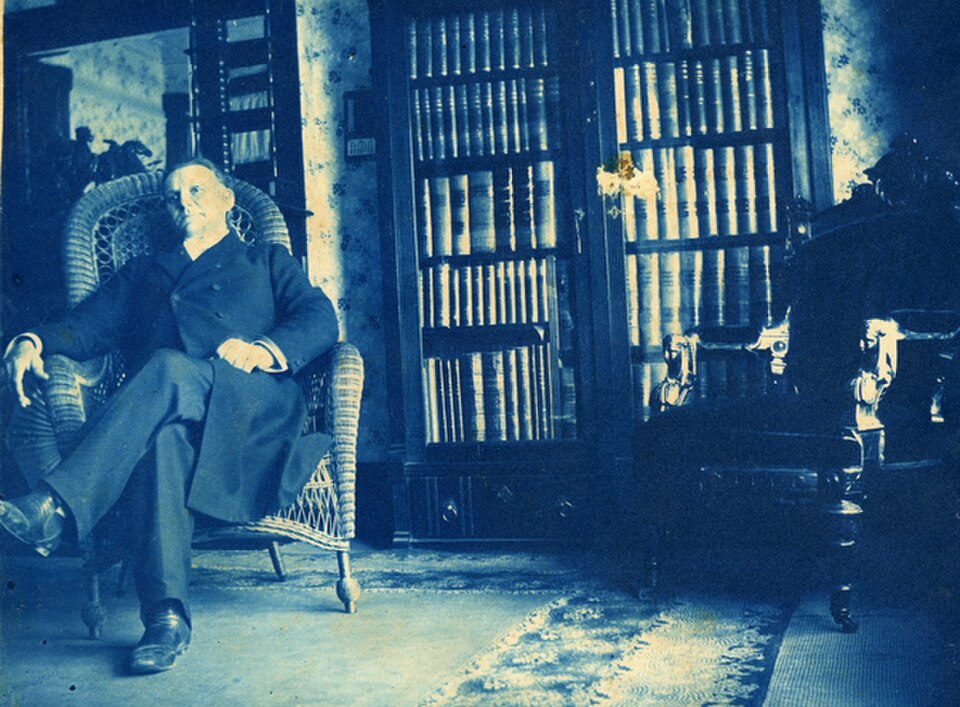
Teed emerged a changed man. He renamed himself Koresh – the Hebrew word for shepherd, and began preaching his gospel to anyone who would listen. Surprisingly, many people did.
Building the New Jerusalem
In 1894, Teed led his followers – the Koreshan Unity to a remote stretch of land along the Estero River in Southwest Florida. He intended to build a city of ten million people.
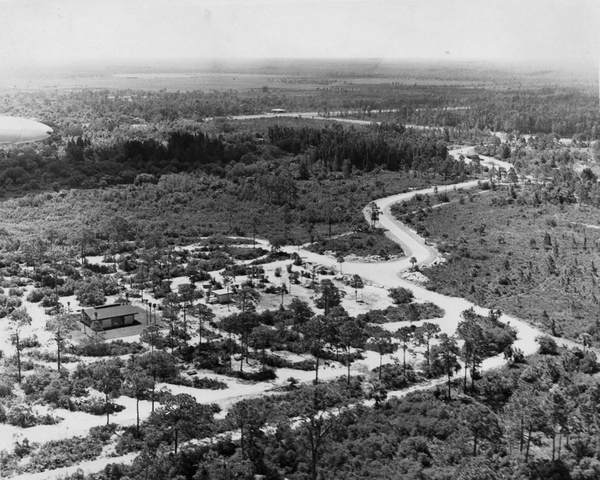
What they actually built was a self-sufficient settlement including a bakery, printing press, art hall, and homes for the faithful. Life inside was austere. Teed preached celibacy, controlled information, and positioned himself as the living embodiment of God on Earth.
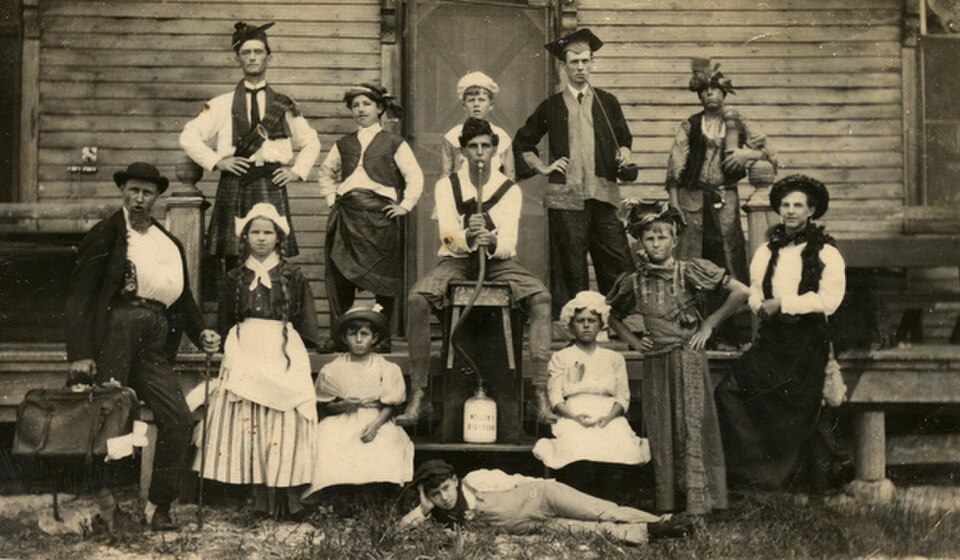
His followers believed him completely.
The Death That Was Supposed to Be Temporary
In 1906, a violent political confrontation in Fort Myers left Teed seriously injured. He never fully recovered. On December 22, 1908, he died.
His followers gathered around his body and waited for the promised resurrection.
They waited for days.
Health authorities eventually ordered the burial. The resurrection never came. Without their prophet the colony slowly unraveled. By 1961, only four members remained – and they quietly deeded the land to the state of Florida. The last official member, Hedwig Michel, died in 1982.
What Waits at Koreshan State Park Today
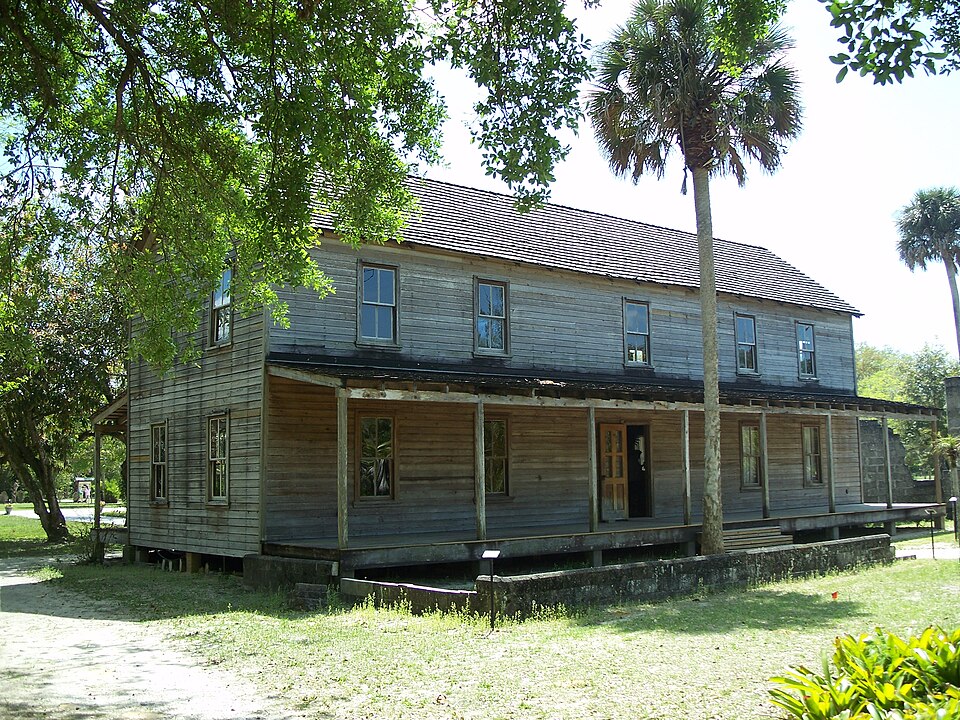
Koreshan State Park sits off US-41 in Estero, about twenty miles south of Fort Myers. The original buildings still stand – weathered, peeling, and open to walk through. The Florida Memory archive holds photographs of the settlers, of Teed in his robes, of a community certain that everything the rest of the world knew was wrong.
Admission is $5 per vehicle.
Something Still Lives Here
Stand among the old buildings as the afternoon light fades and the river darkens, and you will feel it – that stillness that settles over places where people believed something so completely they gave their entire lives to it.
The New Jerusalem never rose. Teed is gone.
But the buildings remain. And somewhere in the deep roots of this strange and stubborn place, the echo of a belief that swallowed hundreds of lives still waits for something that is never coming.
Not the ghost of a man. But the ghost of an idea.
Florida hides more of these stories than most people realize. The walls of Castillo de San Marcos in St. Augustine tell a similar tale – a place where history left something behind that refuses to leave.
Further reading:
We came across an account of the Koreshans that we haven’t stopped thinking about, The Allure of Immortality by Lyn Millner. A newer edition adds something stranger still: David Koresh of the Waco Branch Davidians unknowingly borrowed from Cyrus Teed decades later. If that kind of echo unsettles you the way it unsettles us, it’s worth a read.