Some links in this post may be affiliate links. We earn a small commission if you buy, at no extra cost to you.
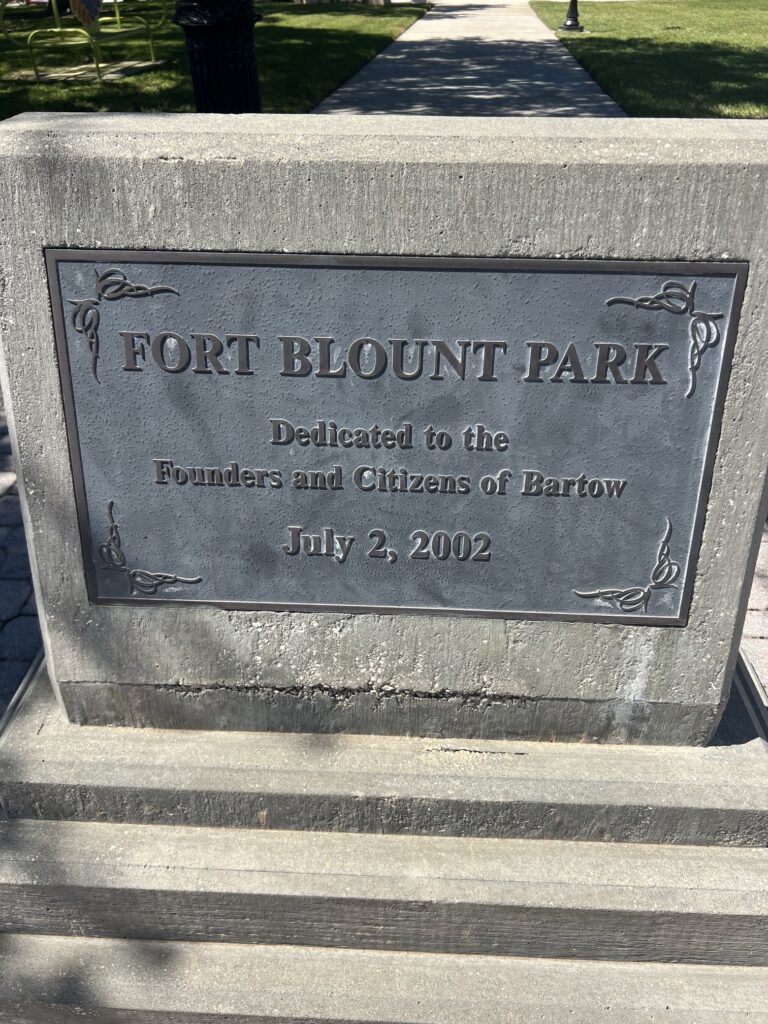
Downtown Bartow has a small park most people walk through without stopping. A Fort Blount Florida historical marker stands there, the only trace left of the settlement that came before the town had its current name.
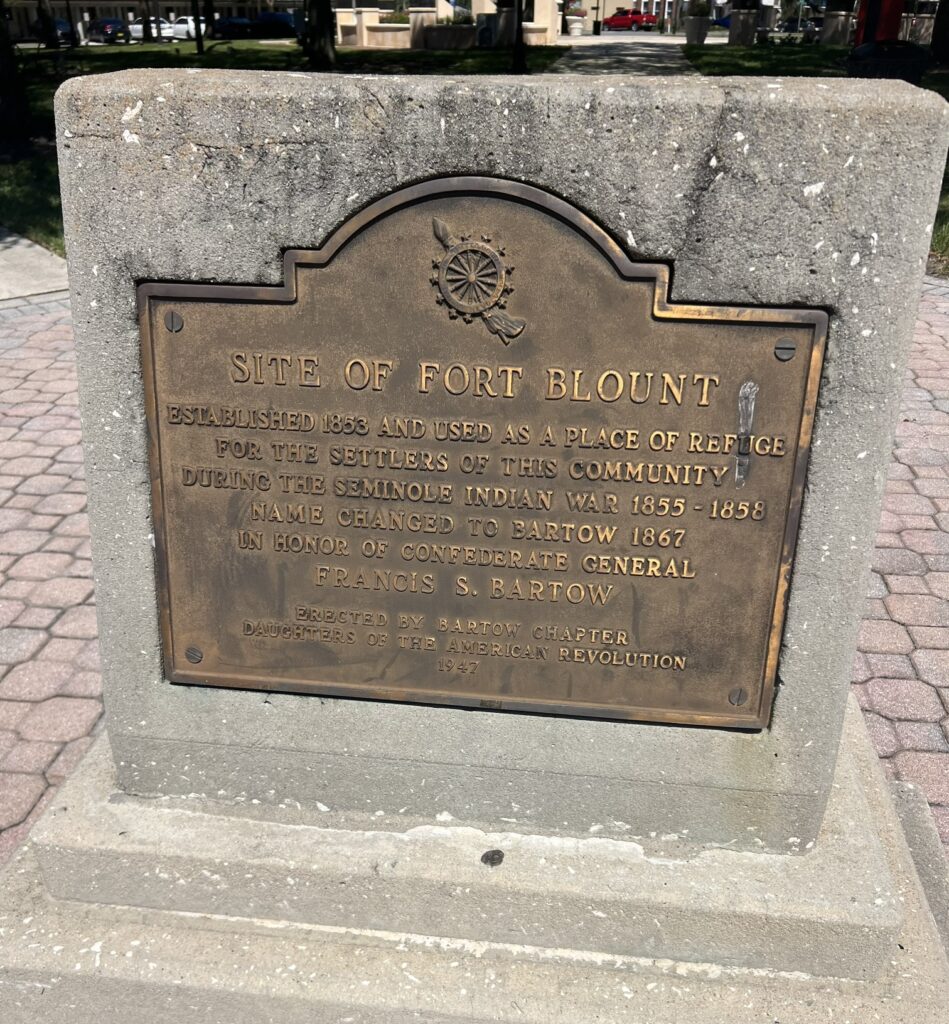
In October 1851, Redding Blount led twenty-one settlers, including his own sons and their families, to a bend in the Peace River just west of what would become downtown Bartow. Twelve enslaved people came with them, with no say in the journey. They weren’t the first people at this bend in the river. A Spanish map from 1527 had already marked a native settlement here, calling it Rio de la Paz, according to FortWiki’s history of Fort Blount. A different name, a different century, the same water.
Years passed before fear caught up with the settlement. When the Third Seminole War began in 1855, the families built a blockhouse at the Blount homestead for protection, and the growing community took the name Fort Blount, according to the city’s own historical marker. The fort stood through the war without ever being attacked. By 1858, when the fighting ended, the blockhouse stood empty. Abandoned, not defeated.
A Name That Erased the Settlers
During the Civil War, the post office at Fort Blount took a new name. Bartow, in honor of Francis S. Bartow, a Confederate officer killed at the Battle of First Manassas in July 1861, one of the first major engagements of the war, per Wikipedia’s history of Bartow, Florida. Bartow never set foot on this land. He never saw this river. He never knew the settlers who built here before him.
Nothing of the original blockhouse survives today. The fort’s actual site sits on private property, separate from the small park where a memorial now stands. That marker, erected by the Bartow Chapter of the Daughters of the American Revolution in 1957, is the only physical trace left of the settlement that gave the town its first name.
We should note something here, since we don’t ignore inconvenient details. The 1957 marker itself lists the settlement’s founding as 1853 and calls Bartow a Confederate general. Independent sources, including the city’s own historical marker, FortWiki, and Wikipedia, place the founding in 1851 and describe Bartow more precisely as an officer commanding a brigade at the time of his death. We’re noting the discrepancy rather than quietly picking a side. The stone and the record don’t fully agree, and that gap is its own small piece of how history gets remembered, or misremembered.
Nearby, in the same small plaza, other monuments stand quietly too. A marker for Jacob Summerlin, the cattle baron who later purchased the Blount homestead and donated the land that made Bartow the county seat. A marker for the phosphate industry that reshaped this part of Florida. A marker for Spessard L. Holland, a Bartow native who became governor and later a United States senator. Names locals still recognize. Stories most visitors never stop to read.
Fort Blount isn’t the only Florida outpost that vanished this way. A few miles south, a different fort left behind nothing but a name and a marker of its own. We covered that story in our post on the Fort Meade, Florida historical marker, where two lieutenants stationed at the same outpost would later lead opposing armies in the Civil War.
The fort disappeared first. Then the settlers who built it. Then the war that gave the place its name.
Only the name stayed.
Watch the full story below.